Moulding


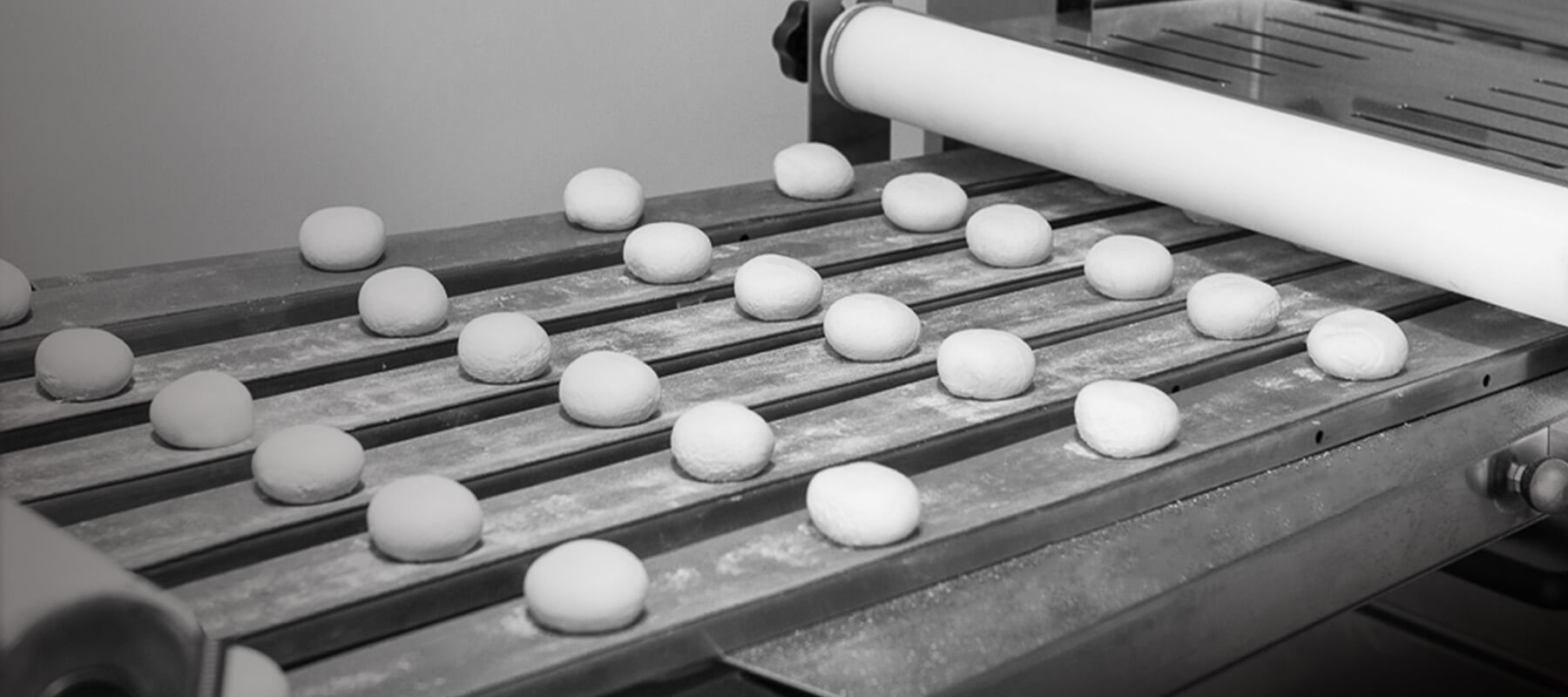
This operation consists of giving the dough rolls a stretched shape. It occurs after intermediate proofers.

Machine moulding remains the most important operation in bread-making. Before acquiring a moulder, it is important to take note of a certain number of deciding points.

There are 3 distinct steps in machine moulding which are all very important:
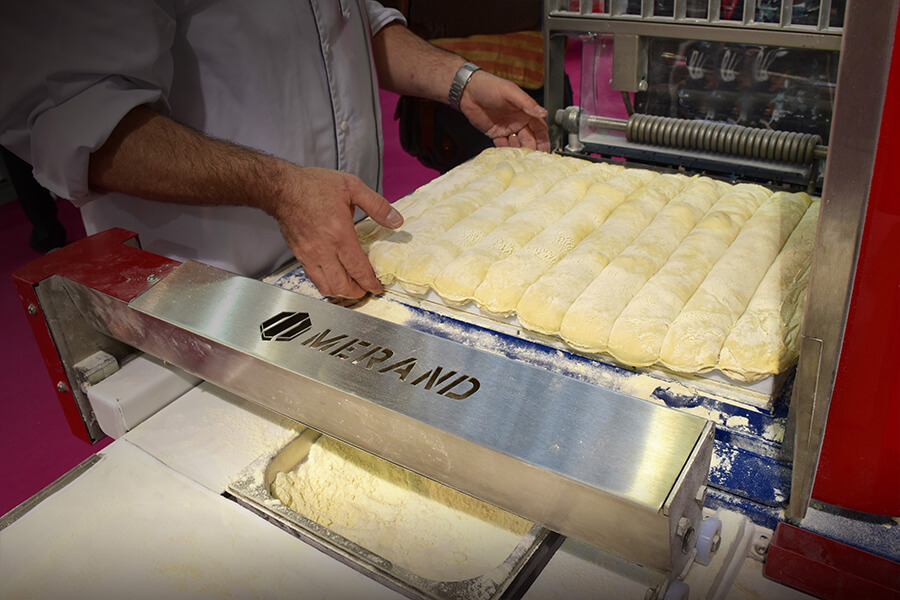
pre-sheeting / sheeting, to obtain a "cake".
formation of the curl (rolling the cake) using a heavy belt
or a mesh.
final moulding to obtain the stretching and the desired appearance
of the baguette or loaf.

 Detailed description of the 3 steps


Horizontal Moulding


This type of moulding is referred to as "traditional" moulding
(as it reproduces the hand movement exactly), is achieved through stretching
between a driven belt and a fixed table.

The dough roll which is drawn in this way is stretched with no heating of the dough.
This process is particularly suitable for soft and delicate dough

MERAND machines Dough preservation Budget Upgradability Productivity Technical data sheet
  Armor ABS II €€ PDF (200 Kb)
  Armor ABS Tradition PDF (203 Kb)
  Armor I PDF (340 Kb)
  Armor Universelle PDF (137 Kb)

Vertical Moulding


This is by far the most widespread for 2 main reasons:
the machines are more compact than horizontal moulders,
the dough roll is stretched between 2 driven belts which move in opposite directions.
This solution provides very good stretching of the products and is particularly suitable for baguettes.
MERAND machines Dough preservation  Budget Productivity Technical data sheet
  Ténor 2 Loft PDF (269 Kb)
  Tregor
PDF (138 Kb)
  Trégor PPR PDF (197 Kb)
  Trégor Tradition PDF (242 Kb)