 |
This operation consists
of dividing the kneaded dough into dough balls of the required
weight. To preserve
the airy structure of the dough, it is important to choose a
solution which prevents excessive air loss.
There are 4 major methods to divide the dough
Manual division
Using a dough cutter, the dough is divided in bulk after output from the kneader.
The dough balls are then weighed so as to obtain dough balls of the required weight.
The operation is fairly long as the dough pieces have to be weighed one by one.
To divide 100 kg of dough to produce baguettes, for example, the operation will have to be carried out around 550 times!
Preserving dough is the main advantage of manual division.
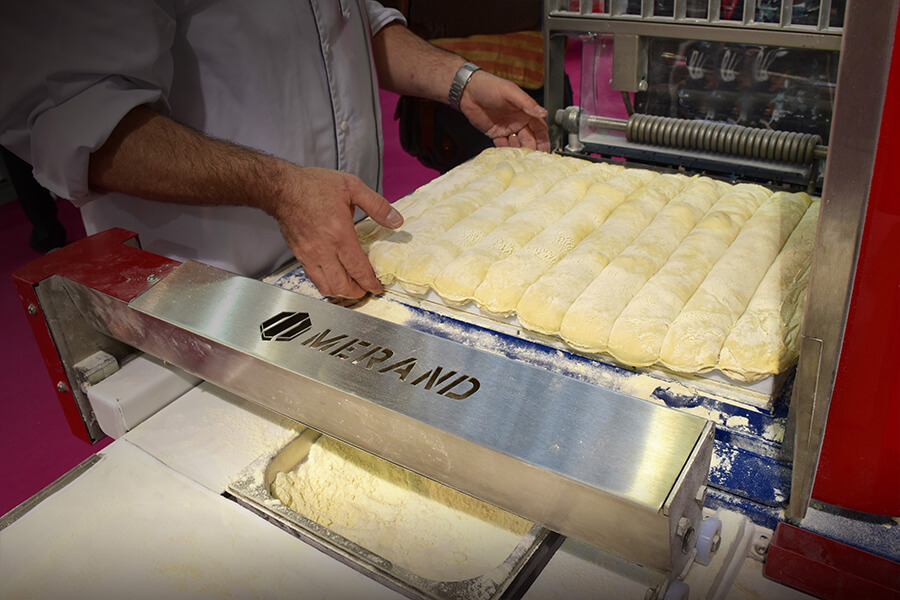
Division with a hydraulic divider
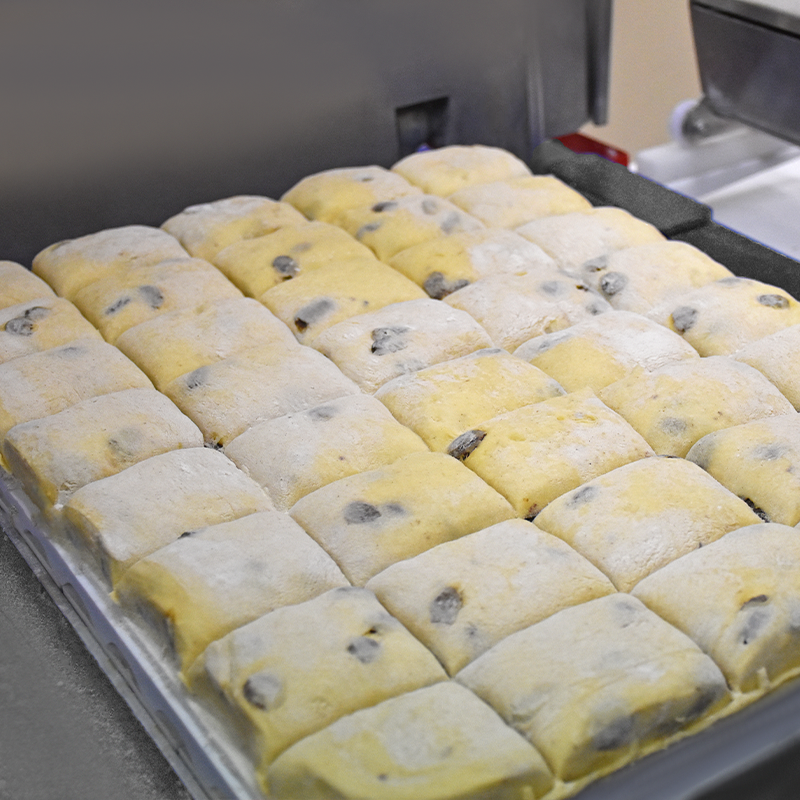
After kneading, the dough is placed in plastic pans. The quantity of dough is weighed in each plastic pan depending on the weight of the dough balls to be produced and the number of divider divisions (for example 20 times 0.3kg, i.e. a 6kg plastic pan of dough to produce 20 baguettes dough pieces).
The operation of weighing and placing in plastic pans is carried out as many times as necessary to empty the kneader (28 times for example to produce baguettes with a 20-division divider and 14 times with a 40-division divider).
The main advantages of division with a hydraulic divider are as follows:
Time saving compared with manual division
Dough preservation compared with automatic division (H.D.M®., the exclusive MERAND hydraulic system provides dividing whilst preserving the dough, like manual division).
In knowknowing more
Division with an automatic divider
Contrary to the previous two solutions, all of the kneaded dough is placed in the divider hopper.
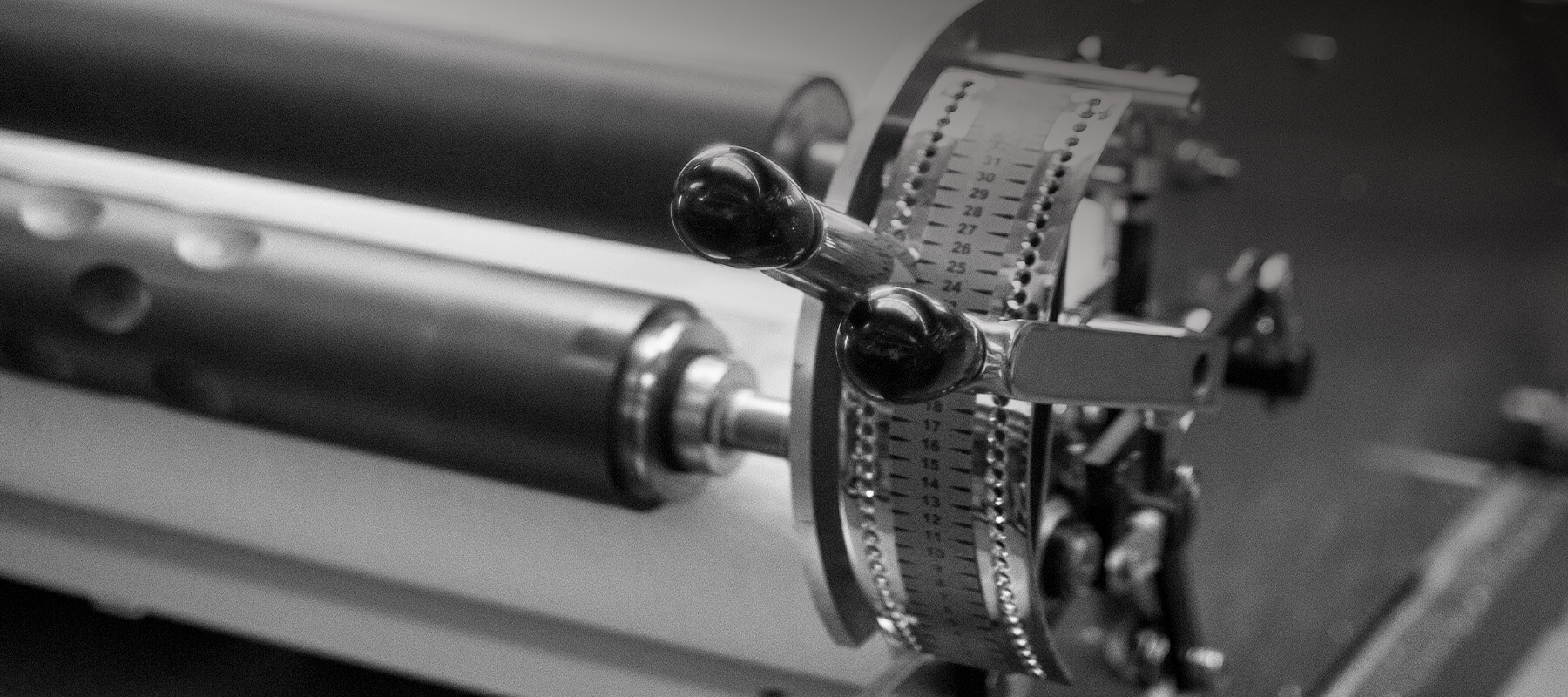
With automatic dividers, the piston stroke is set so as to adjust the volume of the chamber to the mass of dough required per dough ball. This operation is carried out using markers on the machine. They provide an approximation to the required value.
Once the settings are made, the number of dough balls required at that weight is shown on a screen and the machine draws the dough in from the hopper then ejects it after compression in the piston.
The main advantages of division with an automatic divider are as follows:
Time saving
Operations automation: once the machine has been set, the operator can work on something else.
In automatic lines, we recommend using an automatic divider for white bread and a hydraulic divider for traditional dough with a long tub resting time and high hydration rate. This is the best way of combining time saving and versatility.
In knowknowing more
Division with a rounder divider
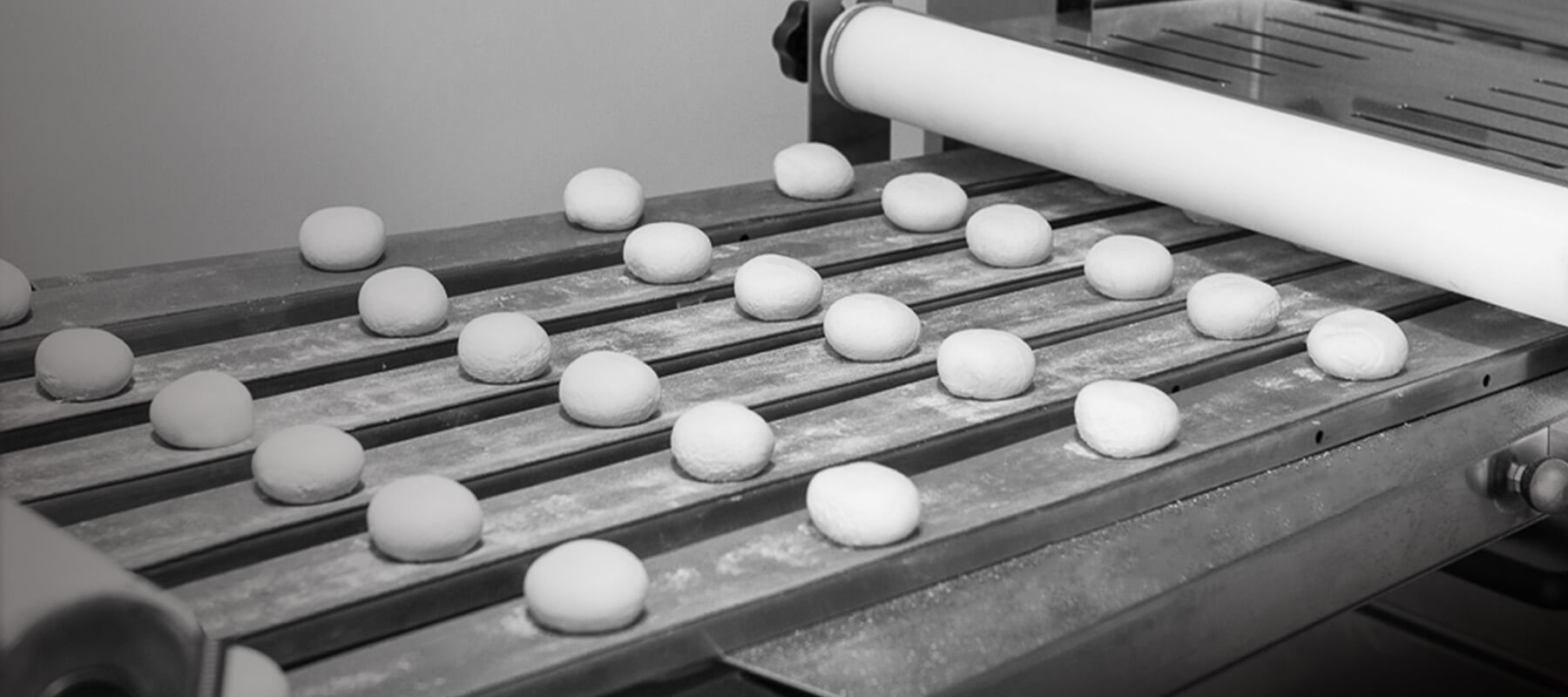
Rounder dividers are used to make bread rolls and dough balls for pizzas, etc.
They have 2 simultaneous functions:
dividing a quantity of dough into 30 or 36 dough rolls (2 machine models)
rounding them.
There are 2 types of divider-rounder:
semi-automatic
automatic
The main advantages of division with a divider-rounder are as follows:
Time saving: 2 operations simultaneously: division and rounding
Rounding quality
In knowknowing more
 |
|